The Science
of Feeling
नाट्यं भिन्नरुचेर्जनस्य
Two thousand years ago, a sage named Bharata wrote that the purpose of drama is not to show events, but to produce rasa — the tasted essence of emotion in the audience. This is a study of that idea, in three layers.
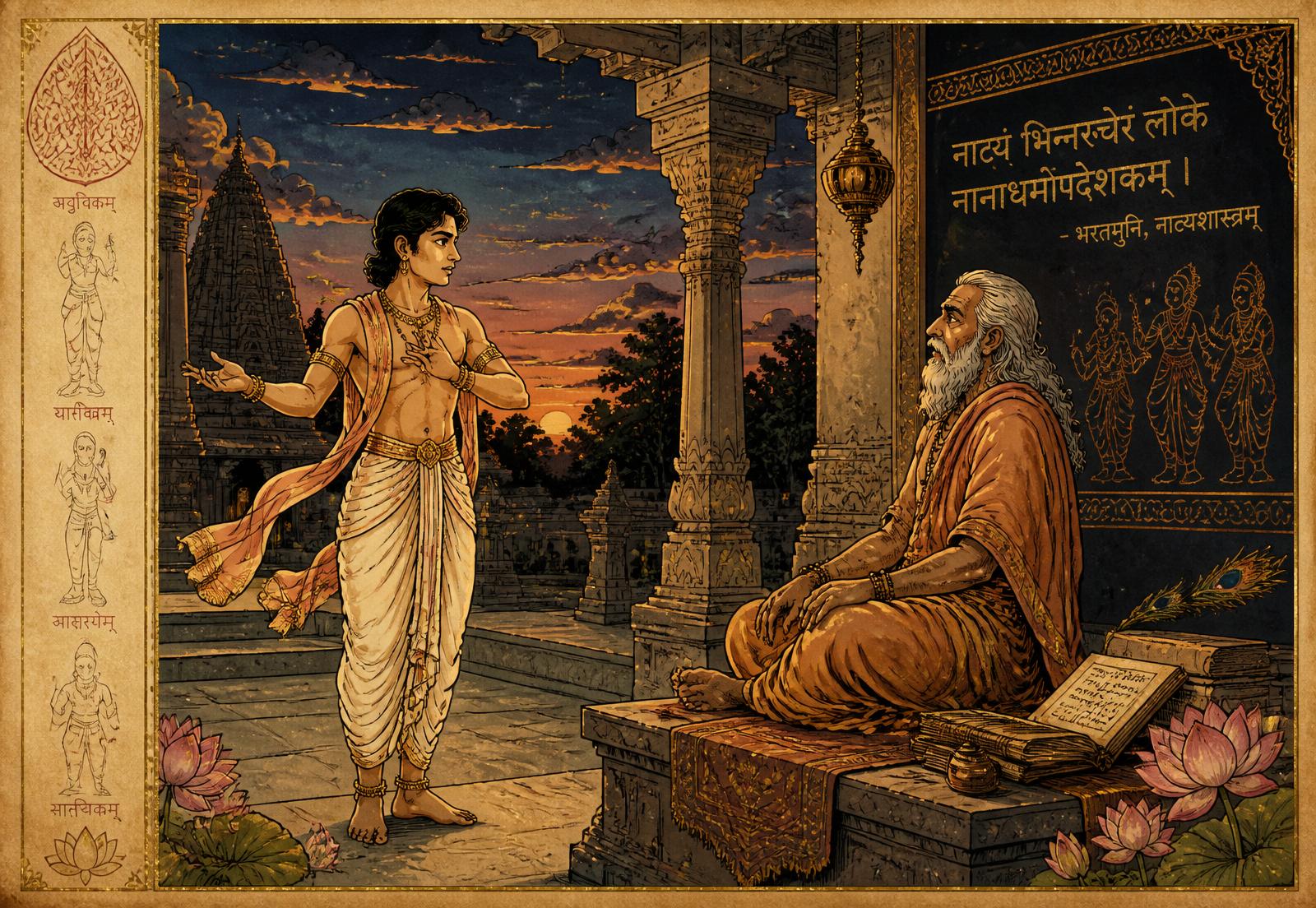
Read it as story, as encyclopedia, as theory.
The Graphic Novel
A young actor arrives at Bharata's hall. Through panels of ink and saffron, he learns that drama is not imitation — it is the cultivation of feeling.
Enter →The Illustrated Guide
An encyclopedic walk through the Nāṭyaśāstra, the nine rasas, Bharata Muni, Kālidāsa, the stage, music, dance, and living tradition.
Enter →The Scholarly Essay
Why Sanskrit theatre never followed Aristotle. A study of rasa as an emotional architecture rather than a structure of plot.
Enter →Modern Echoes
Rasa in Pixar's emotional beats, in the difficulty curves of video games, in the design grammar of contemporary storytelling.
Enter →An emotional architecture, drawn as a wheel.
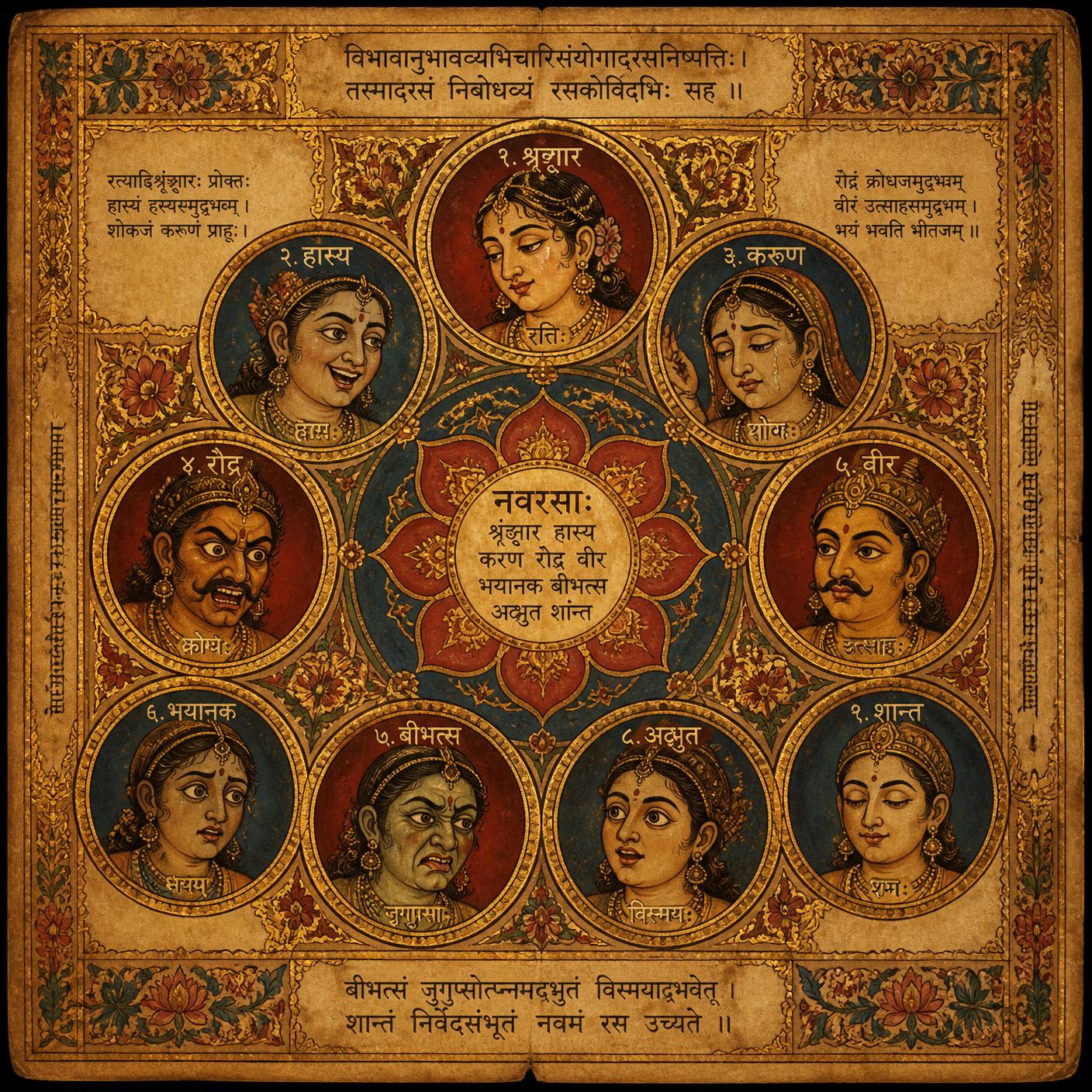
Bharata named eight. A later philosopher, Abhinavagupta, added the ninth — śānta, the peace in which all the others quiet. Hover or tap any petal to taste it.
The sentiment of love, union, and beauty — held as the king of rasas in many treatises.
- Sthāyī Bhāva
- Rati (desire)
- Presiding Deity
- Viṣṇu
"Where the hand goes, the eye follows."
यतो हस्तस्ततो दृष्टिः
यतो दृष्टिस्ततो मनः
यतो मनस्ततो भावो
यतो भावस्ततो रसः
Where the hand goes, the eye follows. Where the eye goes, the mind follows. Where the mind goes, emotion arises. Where emotion arises, rasa is born.
— Nāṭyaśāstra, ch. 6